20 Revealing Sellvia Details On Launching Dropshipping For Free
Wiki Article
Sellvia's Subscription: A Fixed Cost In A Fluctuating Market
For any entrepreneur, how you decide to pay for a service dictates how you think about it. The subscription model in ecommerce is widespread, but it rarely is it as effective when it comes to Sellvia. This isn't just a pay schedule, but an architectural blueprint for the financial logic of your company. Understanding Sellvia isn't only the matter of comparing your monthly cost. It's about gaining an understanding of the fundamentally different model of economics than dropshipping. You trade variable unpredictability against fixed costs. The one choice you make will affect all other decisions that you make, like the choice of products and your marketing strategy.
The first shift in mindset that is critical is to recognize that the subscription isn't an expenditure to be removed at a later time and is the cost to enter the game. In dropshipping with supplier direct the cost of goods is a simple variable percentage. Sellvia provides you with a large, recurring fixed expense that can be recorded in your account if you do not make any sales this month or sell 100. It transforms your break-even calculations from a simple spreadsheet into a necessity. The new baseline needs to be incorporated before you can decide on a specific plan. If the monthly plan costs $39. If your net profit for each item after all variable costs are $13, you must sell three units in order to fill your seat at the table. The first sale is not profit. It's rent. This financial fact immediately excludes a vast universe of low-margin, commodityized goods. This forces you to seek products with a high markup potential, not only to make money, but to first cover this fundamental operational tax.
The subscription is a distinct corporate archetype inside its walls. This model is not compatible with the mentality of "testing", where you throw dozens and hundreds of items in the store to determine which ones work. Every day that is spent trying products that aren't performing is a day of subscription value lost. Sellvia users who are successful don't gamble; they're intelligent gamblers. They don't use the Sellvia catalog as an online game and instead use it as a curated database from which they are able to find high-potential prospects by prevalidation. The subscription is based on efficiency and confidence. It rewards entrepreneurs who have done their market research and audience analysis before hitting the "subscribe" button, because after they've hit it, a fixed fee that can be only justified by volume of sales is set. It eliminates passive and attracts people who are aggressive.
Viewed through the lense of expansion, this fixed-cost model has its own paradox. The subscription is often lauded for its predictability, however this predictability can become an obstacle. In a conventional business model expanding sales could mean negotiating better unit cost with a supplier. This would create economies of scale, which improves your margins. Sellvia's subscription model usually provides an in-built benefit of dynamic scaling. The wholesale price per unit from their catalog is fixed. While your automation improves, your fundamental cost structure does not. You can use the same fulfillment methods for 10 orders per month for $39 or $69 fee. While this may be a great idea initially, it can become limiting because your most powerful competitive advantage, the ability to negotiate prices is always beyond your reach. Subscriptions are a double-edged weapon. They offer stability and security for the launch, but also add rigidity that can be frustrating to ambitious founders as their businesses grow.
It's a test of business self-awareness. It is a question that clarifies your business goals are you creating an asset that leverages the maximum and all aspects of the P&L are streamlined? In the first case, a subscription is an absolute blessing as it is a fixed-cost option that brings assurance and stable delivery. The subscription can feel like a shackle, as it restricts control and possibility of making a profit over the long term. The model is not bad or good; it's just specific. It creates a company that has a solid financial foundation which is dependent on marketing. Your success depends not on battling this structure instead of constructing your entire business from mindset to choosing the right product to executing your marketing plan--to thrive within its unique and uncompromising financial boundaries. Read the recommended sellvia for site advice including sellvia customer service, sellvia product catalog, sellvia custom store, sellvia premium products, sell via amazon, alidropship sellvia, sellvia customer service, selvia dropshipping, sellvia marketing tools, sellvia dropshipping reviews and more, including start ecommerce business with sellvia ecommerce, sellvia contact number, sellvia premium products, sellvia support, sellvia reddit, sellvia reddit, sellvia alidropship, selvia dropshipping, sellvia phone number and sellvia com.
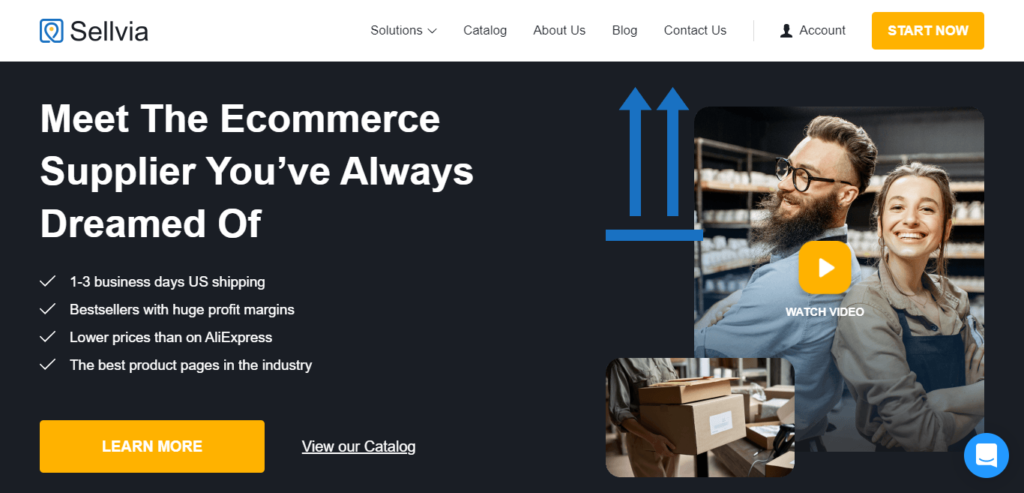
Sellvia's Scale Ceiling - What Happens When Automation Becomes A Cage
Sellvia's promises are powerful for those who are new to the business: it offers a turnkey solution that takes away the logistical nightmares associated with global dropshipping. It allows for a smooth and secure entry into online shopping through the automation of the intricate dance between supplier and warehouse. Automation is what stores sell and can be an empowering experience for businesses that are only getting the first 100 customers. As your business grows and as you expand your ambitions, there is a subtle shift in the system. You are able to establish limits with the very same mechanisms that helped you become more free. The most powerful feature of the platform - its integrated, hands-off control--slowly reveals its counterpart limit on scalability based on the inherent limitations of control. This change is critical to determine if Sellvia is going to be your home for the long haul or just a reliable launchpad.
The first dimension to this ceiling is economic Rigidity. Sellvia's business model rests on simplicity. A monthly fee allows you to access the catalog as well as its fulfillment network. It is extremely efficient in the case of low quantities. The simplicity of this approach doesn't change with the success. As you increase your sales to hundreds of items, your price structure remains relatively static. You lose the ability to negotiate wholesale pricing on the most sought-after items. The profit margin per unit is frozen because you are unable to profit from the economies of scale. Subscription charges used to be a small hurdle but are now a minor cost. But the inability of your organization to reduce its primary Cost of Goods Sold is an issue that is a major one. The growth you experience is not accelerated by improving unit economics; it is linear. You only make money by attracting new customers. This isn't the same as making more money per customer. This is a disadvantage for ambitious founders.
This economic rigidity is tightly linked to a Strategic Similarity. Control over your product is essentially limited. You cannot tweak the appearance of a bestseller, alter the materials used, or bundle it in a unique way without Sellvia's explicit cooperation, which isn't part of their normal model. It is only a retailer, and not a builder of products. This makes it extremely difficult to create a solid brand. It's not just other Shopify shops, it's all the other Sellvia users selling the same product from the very same warehouse. Therefore, you need to build your competitive moat upstream--in marketing, in customer service, and in content. You're limited to only one battlefield, which is powerful. As the platform controls these levers, you are unable to challenge them in terms of product development, exclusive partnerships, or the highest quality assurance. You're largely outsourced to the fate of your company's brand.
Platform Dependency comes into play. Sellvia is a brilliant instrument to reduce operational risk. However, while doing so, it focuses another kind of risk: strategic risk. Your entire business is based on the software they use and their supplier relations. They also manage their inventory levels and perform excellently in fulfilling. A policy change, an increase for their service, or a disruption to their key suppliers is a problem you cannot control or immediately resolve. As there is no alternative supplier, this dependence is the price of automation. This is a reasonable and worth-while trade for lifestyle companies seeking to generate a steady income. For a founder's goal to build a valuable and salable asset - a brand that has a exclusive supply chain, own intellectual property, and transferable system - this dependency is a flaw. Since the primary operations of a company built within the third party platform are not owned by the company, they often have fewer sales than their total.
Sellvia's biggest concern is not whether to start a business, but how it will be perceived at the end. It is a tool which can be used to establish an efficient and profitable business that can generate an income without a lot of hassle. It is less suited for achieving exponential ownership--a dominant brand in which each element of value, from product design from profit margins to customer information is managed and controlled by the founder. The most intelligent users recognize this dichotomy right from the start. Sellvia is a mighty engine that allows users to verify markets, make funds, and understand how to market their products and gain customers. But they do so with an eye on the horizon, knowing that the skills they master on the platform--particularly in driving demand--are the very skills they will need if they ever choose to step beyond its walls, negotiate directly with US wholesalers, or produce their own products, reclaiming control for the sake of scale. Sellvia isn't a prison unless your ambition is to take off in a direction it wasn't intended to fly in. In order to plan your trip it is first necessary to understand the destination it was designed to serve. Check out the top rated sellvia review for blog recommendations including sellvia com, sellvia product catalog, sellvia etsy, sellvia products, sellvia etsy, alidropship sellvia, sellvia pricing, sell via amazon, sellvia custom store, sellvia reddit and more.
